
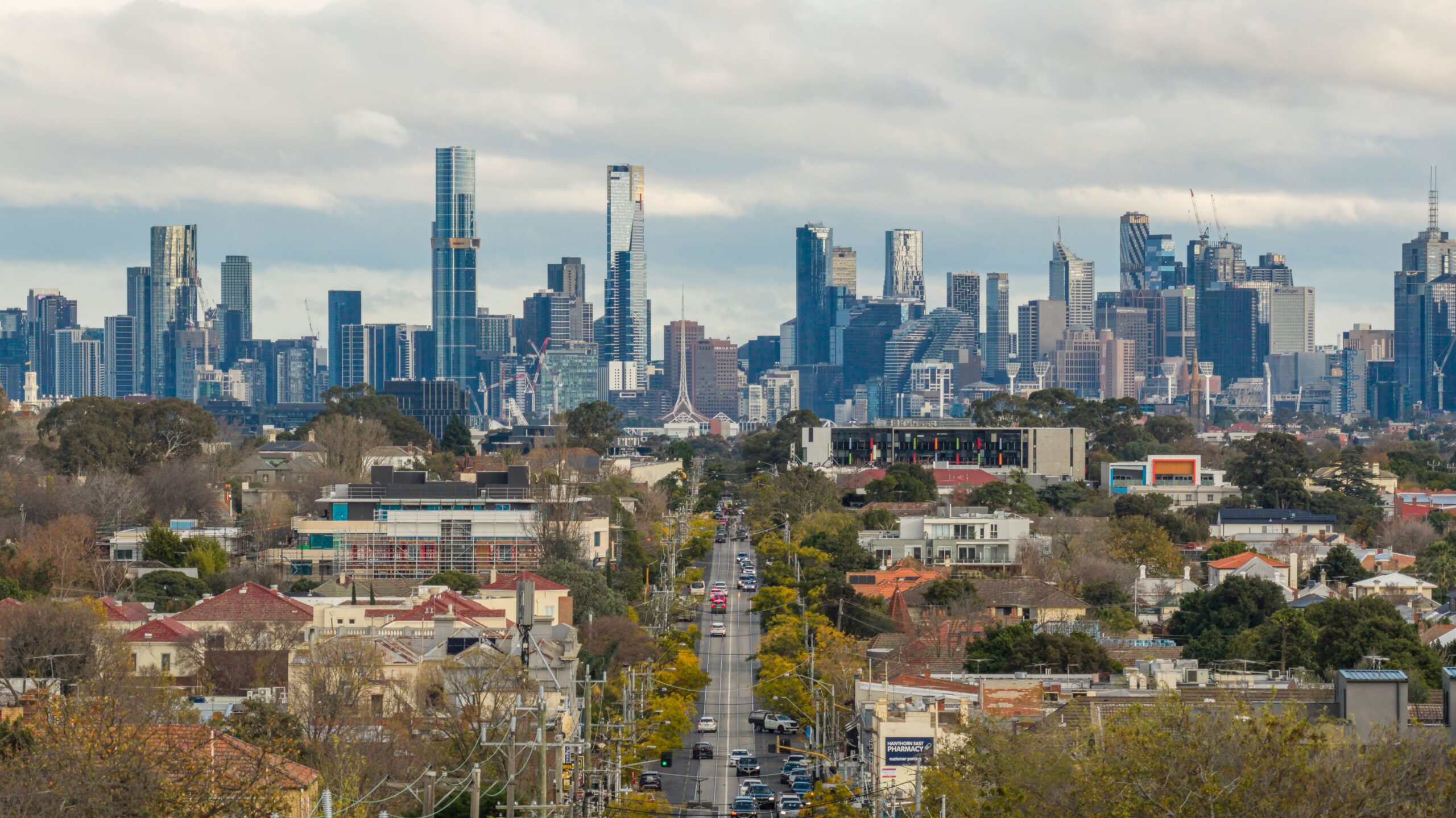
Most “Melbourne suburbs to avoid” lists are clickbait.
They name a few suburbs. Tell you to avoid them. And move on.
But here’s what those lists miss:
It’s almost never about the suburb name. It’s about the characteristics of that suburb.
Because if you understand what makes a suburb underperform, you don’t just learn what to avoid today. You learn how to spot the next underperformer… before it shows up on someone’s list.
That’s the difference between reading content and actually using it.
Quick answer: What to avoid when investing in Melbourne
For readers who want the short version, these are the seven characteristics that consistently signal an underperforming Melbourne investment suburb:
- High-rise, high-density apartment markets
- Markets sitting at the top of their growth cycle
- Prices stretched beyond the Melbourne locals (above ~40 years to own)
- Low owner-occupier suburbs
- Oversupply ‐ building approvals above 1.5% of stock
- Weak demand ‐ high days on market and high vacancy rates
- Low land-to-asset ratio and poor access
The rest of this article explains each one ‐ with Melbourne-specific examples and the actual numbers behind them.
What the data says (and where most lists get it wrong)
I went back to the data on this ‐ suburb-level capital growth, data to May 2026 ‐ because I wanted to test the lazy assumptions, including a few of my own.
Two things came back clearly.
The high-rise apartment markets are the real long-term underperformers
Look at unit (apartment) capital growth over the past decade, within walking distance of the CBD:
| Suburb (units) | 10-year price growth | HTAG capital-growth score /100 |
|---|---|---|
| Southbank | -4.7% | 19 |
| Docklands | +3.2% | 24 |
Read that again.
Southbank apartments have gone backwards over ten years. Docklands is up a grand total of 3.2% ‐ that’s roughly 0.3% a year, which after inflation and holding costs is a real loss.
These aren’t slow performers. They’re capital destroyers dressed up as investments.
The growth corridors had a huge run ‐ but the engine has changed
Here’s where I’ll correct a take I’ve heard repeated everywhere (including in earlier versions of my own content): “the outer corridors stagnate.”
Over the past decade, they didn’t. House capital growth, to May 2026:
| Suburb (houses) | 10-year price growth | Cycle position |
|---|---|---|
| Clyde North | +217% | (+) Peak |
| Wollert | +170% | (+) Peak |
| Tarneit | +135% | (+) Decreasing |
| Truganina | +130% | (+) Peak |
The corridors didn’t underperform. They had a massive run ‐ cheap semi-rural land getting built out, supercharged by the 2020-2024 boom.
So why are they still on my caution list?
Almost every one of those corridors is registering at (+) Peak, with forward projections at the low end running -8% to -1% a year.
The mistake isn’t that corridors are “bad.” The mistake is buying one at the top of its cycle, expecting the last decade to repeat.
The lesson underneath all of it: past growth and future growth are not the same number. Buy the fundamentals, not the brochure.
The 7 red flags that signal an underperforming Melbourne suburb
These are the patterns I see again and again when investors come to me after buying poorly.
They didn’t buy a “bad property.” They bought a property with the wrong characteristics.
1. High-rise apartment dominance
Docklands is the textbook example.
Beautiful waterfront. CBD-adjacent. On paper, it should be one of Melbourne’s best markets.
In practice? +3.2% over ten years. Why?
- Oversupply of near-identical apartments
- High body corporate fees
- Low land content (you own almost no land)
- Heavy investor ownership, low owner-occupier ratio
- No scarcity
When you buy a high-rise apartment, you’re not really buying property. You’re buying air space, with a sliver of land attached.
Southbank, parts of the CBD, and high-rise pockets of Box Hill all carry the same risk profile. The data backs it: capital-growth scores for these unit markets sit in the teens to low-20s out of 100.
2. Buying a market at the top of its cycle
Strong past growth is not a forecast. It’s often the opposite.
Most of Melbourne’s outer corridors are now registering at (+) Peak on HTAG’s growth-rate cycle ‐ Clyde North, Wollert, Truganina ‐ with forward projections that, at the low end, run -8% to -1% a year.
That doesn’t make them “never buy.” It makes them “don’t buy expecting 2015 to repeat in 2026.”
If a suburb has just delivered its best decade in a generation, that’s the moment to ask what the next decade looks like ‐ not to assume it rhymes.
3. Prices stretched beyond the people who live there
Capital growth is powered by owner-occupiers who can afford to buy and stay. When prices run well ahead of the local market, that engine stalls ‐ growth starts leaning on investors, and investor-led markets are more fragile.
The quick read is the Affordability Index (years-to-own): Melbourne benchmark is around 40 years. Above that, you’d want a very good reason to be there.
On it alone, some outer corridors actually look “affordable” (Tarneit comes in around 34 years) precisely because the houses are new and cheap relative to rent ‐ but they fail badly on everything else. So read affordability with the supply and demand flags below, never on its own.
The suburb that genuinely threads the needle is rare. Werribee is one: around 39 years to own, and it clears every supply and demand test that follows. Affordable to its locals, scarce, and in demand ‐ that’s the combination you’re actually hunting for.
4. Low owner-occupier ratio
This one’s underrated.
Capital growth is driven by owner-occupiers, not investors.
Owner-occupiers buy emotionally. They pay a premium for the right home in the right street. They compete with each other on auction day.
Investors? They buy on numbers. They walk away if the maths doesn’t work.
So when a suburb tips heavily toward investor ownership, capital growth slows.
A healthy investment-grade Melbourne suburb has:
- At least 70% owner-occupiers
- Stable, long hold periods (8-10+ years)
- Streets with established residents
When you see suburbs with 50%+ renters, high investor concentration and short hold periods… that’s not a market that compounds well.
5. Oversupply ‐ and the weak demand that comes with it
This is the trap that’s live right now ‐ and it’s where the data is most damning.
There are two halves to it, and you read them together.
Oversupply. When developers can keep releasing new estates, scarcity never establishes. The cleanest measure is the building-approval ratio ‐ new supply coming as a share of existing stock. My threshold is 1.5%. Above it, you’re buying into a supply pipeline that competes with you the day you settle.
Weak demand. Oversupply shows up on the demand side as homes that take a long time to sell (high days on market) and rentals that sit empty (high vacancy). My lines: days on market 30 or less, vacancy below 2.5%.
Look at the difference. Data to May 2026 (source: HTAG Intelligence):
| Suburb (houses) | Building-approval ratio | Days on market | Vacancy | Hold period |
|---|---|---|---|---|
| Mickleham | 9.4% | 39 | 4.1% | 4.5 yrs |
| Clyde North | 7.7% | 48 | 3.6% | 4.8 yrs |
| Wollert | 6.2% | 30 | 3.9% | 4.9 yrs |
| Tarneit | 4.0% | 51 | 3.3% | 5.4 yrs |
| Truganina | 3.9% | 55 | 2.8% | 6.2 yrs |
| Kalkallo | 3.2% | 48 | 8.1% | 3.8 yrs |
| versus ‐ built-out, genuinely scarce | ||||
| Werribee | 0.9% | 28 | 2.5% | 8.0 yrs |
| Hoppers Crossing | 0.1% | 21 | 2.5% | 10.5 yrs |
| Mernda | 0.6% | 25 | 2.1% | 8.1 yrs |
| Doreen | 0.1% | 24 | 1.1% | 8.0 yrs |
Look at it.
Every named corridor is running building approvals of 3-9% ‐ supply flooding in ‐ while houses take 36 to 62 days to sell and vacancy runs above 3% (Kalkallo at a frankly alarming 8.1%). And owners aren’t staying: hold periods under five years mean churn, not the tight, established streets that compound.
The built-out suburbs are the mirror image: new supply under 1%, houses gone in 15 to 28 days, vacancy at or below the line, and owners holding 10+ years.
That’s the difference between a market that’s been manufactured and one that’s genuinely scarce.
My rough screen, if you want to run it yourself:
- Building-approval ratio under 1.5%
- Days on market 30 or less
- Vacancy below 2.5%
- Average hold period 8 years or more
- Stock on market under ~0.3%
6. Low land-to-asset ratio
One of the most important ‐ and most ignored ‐ fundamentals in property.
The principle is simple:
- Land appreciates
- Buildings depreciate
So you want most of your purchase price sitting in the land, not the building.
A new house-and-land package on a 350sqm block? Maybe 40-50% land. That building depreciates from day one.
A 1970s home on 650sqm in a built-out suburb? The land might be 75-85% of the price. Even if the house is dated, the land keeps working ‐ and eventually it gets renovated, replaced or subdivided.
It’s exactly why the high-rise unit markets above sit at the bottom of the table. Almost no land per dwelling.
7. Distance without access
Distance to the CBD matters less than people think. Access matters more.
And that access isn’t just about the CBD. Many people rarely travel into the city at all. Instead, they rely on nearby employment, education, healthcare, retail and lifestyle precincts.
That’s why proximity to major satellite hubs such as Geelong, Frankston, and Hoppers Crossing can be just as important as access to the Melbourne CBD.
A suburb 30km from the city with a train line, freeway access and strong connections to a major employment hub can outperform a suburb 20km away that is difficult to get in and out of.
Many underperforming suburbs aren’t too far. They’re simply too disconnected. Limited public transport. Congested road networks. One road in and out. Poor access to both the CBD and nearby activity centres.
When residents face long, frustrating commutes to work, schools, healthcare and everyday services, owner-occupier demand tends to soften. And because owner-occupiers are the primary drivers of long-term capital growth, property performance often softens with it.
When assessing a suburb, don’t just ask, “How far is it from the CBD?” Ask, “How easily can residents access the jobs, services and amenities they use every day?” That’s usually the more important question.
The pattern: suburbs to avoid share characteristics, not coordinates
Look at Melbourne’s weakest investment performers and you’ll see the same traits repeat:
- Excess supply (new land or new apartments)
- Low land content per dwelling
- Investor-heavy ownership
- Prices stretched past the local buyer base
- Weak demand (slow sales, high vacancy)
- A cycle position that has already peaked
Tick three or more? Be very, very careful. No single flag is the whole story ‐ it’s the stack that tells you.
It’s why I don’t buy in high-rise apartment markets, and why I’m cautious on growth corridors even if they’ve had a strong decade.
Not because the people living there aren’t lovely. Because the asset fundamentals ‐ supply, scarcity, demand, affordability, cycle ‐ don’t support the next decade of growth.
Where I see investors get hurt most
I’ll be direct. Two situations cost Melbourne investors the most:
1. Off-the-plan apartments in oversupplied locations
The brochures look incredible. The display suites are immaculate.
Three years later, when the building completes:
- Comparable apartments sell for less than the contract price
- The bank revalues low and the buyer tops up at settlement
- Rent comes in under projection
- Body corp fees come in over disclosure
Southbank’s -4.7% over a decade isn’t a freak result. It’s what oversupply does.
2. House-and-land in a corridor that’s already peaked
A new build feels safe. Brand new, modern, low maintenance.
But the depreciation clock starts the day it’s finished, the next estate stage releases more identical homes, vacancy is already running above 3%, and ‐ if you bought at peak ‐ the cycle is working against you, not for you.
Both are sold as “investments.” They often behave like depreciating consumer purchases.
The mental shift that changes everything
Stop asking “Which suburbs should I avoid?”
Start asking “What makes an asset compound ‐ and does this one stack up across the board?”
The moment you understand the fundamentals ‐ supply, demand, owner-occupier ratio, land content, scarcity, affordability, access, and cycle position ‐ you stop needing lists.
You can walk into any Melbourne suburb and assess it on principle.
That’s not a list. That’s a framework. And a framework lasts decades.
Frequently asked questions
There’s no single fixed list, because performance is driven by characteristics, not postcodes. The clearest long-term underperformers within 50km of the CBD are high-rise apartment markets ‐ HTAG Intelligence data (to May 2026) shows Southbank apartments down about 4.7% and Docklands up just 3.2% over ten years. Separately, outer growth corridors including Tarneit, Truganina, Wollert, Mickleham, Kalkallo and Clyde North carry heavy supply risk: building-approval ratios of 3-9%, houses taking 36-62 days to sell, and vacancy above 3%.
Not all of them. Well-located art-deco and boutique established brick blocks in tightly held suburbs can perform well. The problem is high-rise, near-identical apartments in oversupplied locations like Southbank, Docklands and parts of the CBD. These carry low land content, high body corporate fees and continuous new supply, and the data reflects it ‐ capital-growth scores for these unit markets sit in the teens to low-20s out of 100.
Because past growth and future growth aren’t the same number. Houses in Clyde North (+217%), Wollert (+170%) and Tarneit (+135%) have had a massive decade, but they are near the peak of their cycle with soft forward projections, building-approval ratios of 3-9% (versus under 1% in built-out suburbs), and short hold periods under five years. Scarcity never establishes while new estates keep releasing.
Look for low new supply (building-approval ratio under 1.5%), low stock on market (under ~0.3%), long average hold periods (8+ years), fast sales (days on market 30 or less), and a tight rental (vacancy below 2.5%). Within 50km, suburbs like Werribee, Hoppers Crossing, Doreen and Mernda score well across these.
Not always ‐ but you need to understand the impact. Overlays can reduce future development potential, increase build and insurance costs, and limit the pool of future buyers. VicPlan (the Victorian Government’s online planning tool) lets you check overlays on any property in Victoria before you make an offer.
It’s the proportion of your purchase price represented by land versus the building. Land appreciates; buildings depreciate. A property where 70%+ of value sits in land typically outperforms one where land is only 40-50%, all else equal.
Built-out suburbs with limited new supply that are very affordable for their residents, owner-occupier ratios above 70%, hold periods of 8+ years, low stock on market (less than 0.3%), tight vacancy (less than 2.5%), good access ‐ and ideally a cycle position that isn’t already at its peak. Within 50km, Werribee is a rare example that clears the full screen: around 39 years to own, a 1% building-approval ratio, 28 days on market, 2.5% vacancy and 8-year holds.
Neither is automatically better ‐ it depends on the asset and the buyer’s goals. Inner-Melbourne purchases tend to offer scarcity and strong owner-occupier demand but require a larger budget. Established middle-ring and well-located outer suburbs (built-out, with transport access and strong school zones) can offer better value and similar long-term performance. The suburbs to avoid in both rings are those carrying excess supply, low land content or weak demand drivers.
The bottom line on Melbourne suburbs to avoid
The wrong suburb won’t always announce itself.
It often looks fine on a Saturday inspection. Nice street. Friendly agent. Well-presented home.
But underneath? The fundamentals don’t stack up. Too much supply. Too little land. The wrong buyer mix. Prices stretched past the locals. Or a cycle that’s already run.
These things don’t show up on a listing. They show up 10 years later ‐ when you go to sell and the market hasn’t moved.
If you take one thing from this article, take this:
Buy on fundamentals. Not on feel.
And if you’re not sure which side of that line a property sits on? That’s exactly when an independent buyer’s advocate earns their fee ‐ before a $700k mistake becomes a 10-year setback.
You can book a call with First Move Property to talk through your brief.
About the Author: Haley Lim
Haley Lim is the Founder and Managing Director of First Move Property, a passionate property investor, and a trusted Melbourne buyers advocate with deep knowledge of the local market.
Before founding First Move Property, Haley was a professional negotiator who held senior corporate leadership roles and led high-stakes commercial negotiations worth billions of dollars across Europe, Australia and New Zealand in the fuel and energy sector.
That background gives her clients a clear edge in Melbourne’s property market ‐ combining strategic thinking, calm execution and disciplined negotiation. Today, Haley brings that same approach to every client she represents, helping home buyers and investors navigate Melbourne with clarity, reduce avoidable risk, and secure properties that align with their long-term goals.
Connect with Haley: LinkedIn | Email: haley@firstmoveproperty.com.au | Phone: 0477 555 783
Disclaimer: This article is general information only and does not constitute legal, financial, taxation or personal investment advice. Property selection should always be based on your individual objectives, budget, borrowing capacity and risk profile. Buyers should obtain independent legal, financial and tax advice before making any property decision. Market conditions, planning controls, infrastructure investment and lending settings can change over time. Any suburb-level commentary in this article reflects the author’s professional opinion based on publicly available market data and is not a recommendation for or against any specific property purchase.