
Hoppers Crossing at a Glance – Key Facts (April 2026)
| Metric | Figure |
|---|---|
| Typical house price | $744,354 |
| 12-month price growth | +8.4% |
| 10-year cumulative growth | +66.8% |
| 10-year CAGR | 5.25% per year |
| Typical weekly rent | $473/week |
| Gross rental yield | 3.3% |
| 3-year rental growth | +26.4% |
| Vacancy rate | 2.79% |
| Days on market | 24 days |
| Auction clearance rate | 68.8% |
| Stock on market | 0.23% of dwellings |
| Average hold period | 10.9 years |
| Owner-occupier ratio | 74% |
| Market cycle position | (+) Peak |
| Distance to Melbourne CBD | ~24km south-west |
Source: HTAG Intelligence, April 2026
I’ll be honest with you.
When I first started buying in Hoppers Crossing for clients, I had to do a bit of convincing. Not of my clients – of myself.
Because if you’ve only ever driven through it on the Princes Highway past the warehouses and big box retail, you’d be forgiven for thinking, “this isn’t it.”
But that’s the thing about Hoppers Crossing property. The people who write it off are usually the people who’ve never actually walked its streets.
And I walk every street I buy on.
What Most Investors Get Wrong About Hoppers Crossing
Hoppers Crossing is one of Melbourne’s largest suburbs – roughly 24km south-west of the CBD – and it does not behave like one big uniform thing.
I say this all the time, and I’ll say it again: suburbs don’t behave as a single, uniform thing. There are streets within streets, and pockets within pockets.
Some parts of Hoppers Crossing? I’d walk straight past them. Other parts – particularly the Cambridge Estate – are some of the most tightly held, family-owned pockets in Melbourne’s west.
I’ve bought in Cambridge multiple times for clients now. Homes that back onto reserves. Wide side access. Blocks well over 600sqm. In school zones that families fight to get into.
These properties don’t sit online. Agents call me directly when something like that comes up.
That’s not luck. That’s what happens when you show up enough times that agents trust you.
Hoppers Crossing House Prices & Market Data (April 2026)
Let me tell you what the numbers are telling me right now – because they’re interesting.
The current typical house price in Hoppers Crossing is $744,354 (April 2026). But here’s the part that catches people off guard: that’s up 8.4% in the last 12 months alone.
Over ten years? House prices in Hoppers Crossing have grown 66.8% cumulatively – a compounded annual growth rate of 5.25% per year.
That’s not a suburb sitting still. That’s a suburb that’s been quietly compounding while people were busy writing it off.
Even more telling is what’s happened over the last six months. Prices are up 4.9% in that window – which tells me the market has found its legs again after a relatively flat 2023–24 period.
And the cycle position? Hoppers Crossing is currently sitting at the (+) Peak of its growth rate cycle. The projected annual capital growth range sits between -4% on the low end and +10% on the high end, with a midpoint that makes this a compelling hold for patient investors.
Strategic call?
- HOLD (if already owned)
- BUY selectively and don’t chase (be disciplined)
- AVOID for short-term momentum plays, as it is at the peak and has had a phenomenal amount of growth over the last 12 months.
Hoppers Crossing Rental Market
Rents have been the real story of the last few years. Rental prices have grown 26.4% over three years and 34.3% over five years. That’s rents climbing faster than prices – which compresses yields in the short term, yes, but signals something important: demand for Hoppers Crossing as a rental market is real and it’s not going away.
The current weekly rent sits at $473/week for houses, with a gross yield of 3.3%. Not the highest yield in Melbourne – but remember, you’re buying into a suburb where rents have compounded at over 6% per year for five years. The trajectory is what matters.
Is Hoppers Crossing a Good Investment? Here’s What the Supply Data Says
Stock on market is sitting at just 0.23% of total dwellings.
For context: that’s extremely low. When you’ve got roughly 15,000 dwellings in a suburb and only 0.23% available at any given time, you’re not dealing with a market drowning in options. You’re dealing with scarcity – and scarcity is what drives price pressure over time.
The average hold period in Hoppers Crossing? Almost 11 years.
People who buy here… stay. And the ones who do sell typically wait a long time before they do. That’s not the behaviour of a suburb people are trying to escape. That’s the behaviour of a suburb people genuinely love living in.
New building approvals as a ratio of total dwellings are also negligible – which makes sense, because Hoppers Crossing is essentially built out. There’s no flood of new supply coming to dilute what’s already there.
The Vacancy Rate Conversation (And Why the Headlines Lie)
I know what some of you are thinking. You’ve seen the vacancy stats quoted back to you as a reason not to buy in Melbourne’s west.
The current vacancy rate in Hoppers Crossing sits at 2.79%.
But here’s what those headline numbers don’t tell you: vacancy is not uniform across a suburb. It’s concentrated. It lives in specific streets, specific pockets, specific property types.
Every single investment property I’ve bought in Hoppers Crossing for clients has been tenanted easily. Not because I got lucky. Because I chose the right street in the right pocket, zoned to the right school, in an owner-occupier dominated area where families don’t leave unless they have to.
Days on market? Just 24 days. Properties are moving. The clearance rate is sitting at 68.8%. That’s a healthy, functioning market – not a distressed one.
Why Hoppers Crossing Property Investment Makes Sense Right Now
A few reasons – and none of them are “it’s cheap.”
1. Strong Land Component with Development Potential
We’re talking 500–750sqm blocks that are flat, rectangular, and sometimes also zoned for dual occupancy. Wide side access is often possible here. A property with room for a second dwelling or a granny flat isn’t just a home. It’s a strategy.
One of my clients recently built a granny flat on his existing Hoppers Crossing block instead of buying a second property altogether. Better cashflow. More value added. And a plan that actually fit his life. That’s what a good asset allows you to do.
2. Owner-Occupier Dominated Market
The data backs this up: the renter-to-owner ratio in Hoppers Crossing sits at 26% renters to 74% owner-occupiers. That’s a suburb where the vast majority of people own their home – and that matters enormously for long-term price stability.
When owner-occupiers dominate, vacancy becomes a non-issue in the right streets. Neighbours take pride in their homes. And when the market moves, it moves with conviction – because the buyers competing for these properties want to live there, not just hold them.
3. Transport and Infrastructure Already in Place
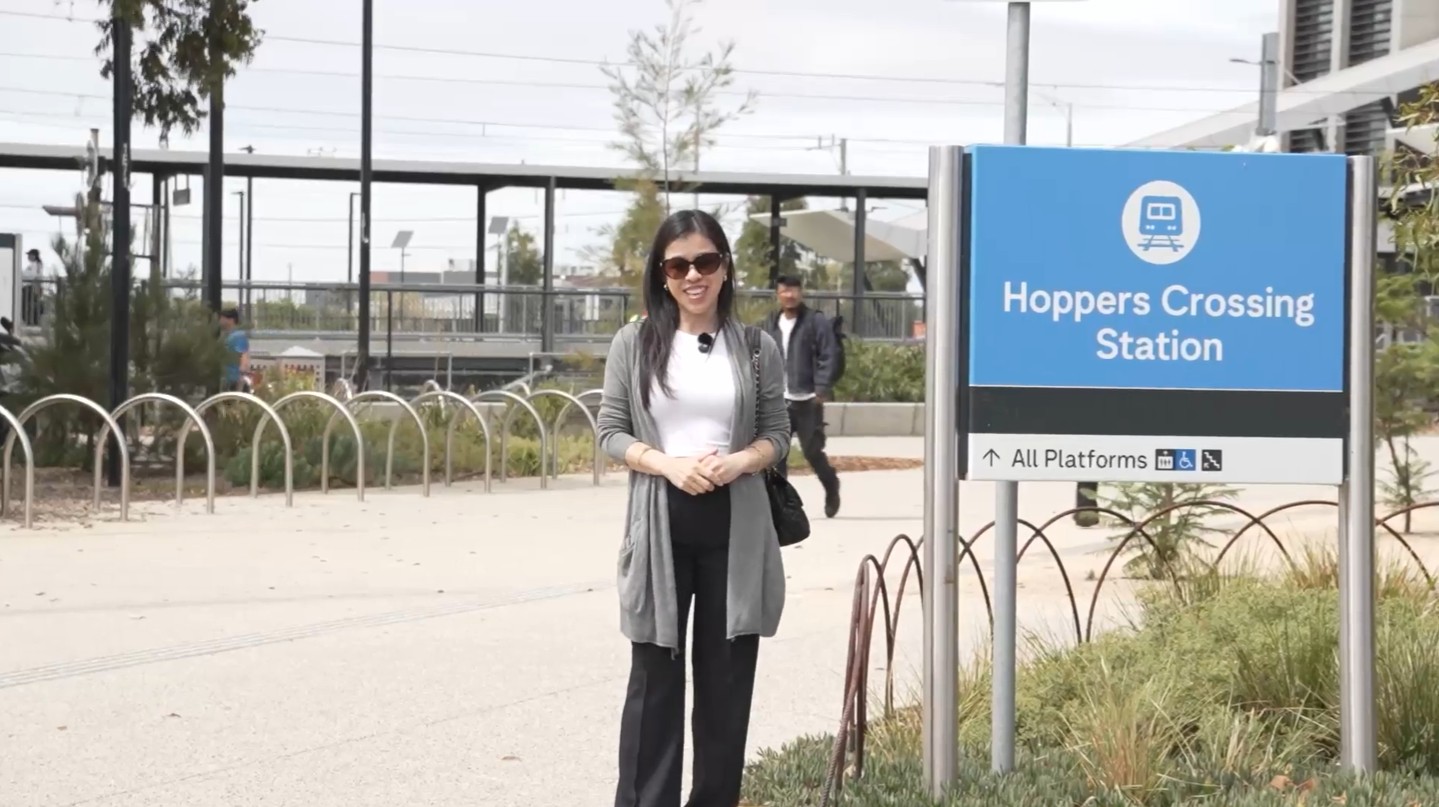
Two train lines – Werribee and Tarneit – with the Melbourne CBD accessible in under 40 minutes during peak. The Princes Freeway gives you direct access east to Melbourne and west to Geelong and the Surf Coast. The recently upgraded Hoppers Crossing station precinct has only added to the suburb’s liveability.
This isn’t a suburb waiting for infrastructure. It already has it.
4. School Zones Drive Long-Term Rental Demand
Families don’t leave a good school zone until they have to. The better pockets of Hoppers Crossing are zoned to schools that people specifically move into (Cambridge Primary School) – and that kind of demand is quiet, constant, and incredibly powerful for rental stability and long-term resale.
Real Off-Market Deals I’ve Done in Hoppers Crossing
Every one of these came through relationships – none of them were listed online.
I recently bought a 3-bed, 1-bath home in the heart of the Cambridge Estate for a client – off-market, 650sqm, backing onto a beautiful reserve, under $700k. If you know Cambridge, you know how rare that is. Tightly held, family-owned for over 20 years. The agent called me before it went anywhere near a listing portal.
I bought a 4-bed, 2-bath on 604sqm in a sought-after school zone – off-market, brick, north-facing, big backyard, subdivision potential – for $685,000. Settled January 2026. The clients flew down from Canberra to inspect it. When they walked through: “It’s exactly how you described it. Actually… it’s better.”
That’s the moment I always hope for.
And about a year ago, I secured an off-market property for a couple holidaying on a boat in the Whitsundays. We jumped on a call from their boat, put in an offer that night, and had the contract exchanged within 24 hours – for $610,000. Comparable sales in that pocket are now over $100,000 higher. The agent called me before the listing went anywhere, because the relationship was already there.
The best investment properties in Hoppers Crossing don’t live on realestate.com.au. They live in relationships.
What I Look For in a Hoppers Crossing Investment Property
Since I’m here, I may as well be useful.
When I’m assessing an investment property in Hoppers Crossing, here’s exactly what I’m looking at:
- Block size and shape. 500sqm+ with a flat, rectangular footprint. Wide side access is a bonus.
- Street quality. I drive it at different times of day. A good morning doesn’t guarantee a good evening.
- School zone. Worth understanding before you fall in love with a property, not after.
- Pocket within the suburb. Cambridge Estate is a completely different proposition to other parts of Hoppers Crossing. Don’t conflate them.
- Owner-occupier dominance. I want long-term residents. Neighbours who’ve been there 15–20 years. That tells me something the data can’t.
- Future optionality. Granny flat potential, subdivision potential, or the ability to add value and improve the asset. I want exit strategies, not just hope.
FAQs: Hoppers Crossing Property Investment
In the right pockets, yes – it’s one of the better value propositions in Melbourne’s west. The suburb has delivered 66.8% cumulative house price growth over 10 years, has stock on market of just 0.23%, and an average hold period of nearly 11 years. The key is understanding which streets and pockets to buy in, and which to avoid.
As of April 2026, the typical house price in Hoppers Crossing is $744,354, up 8.4% in the past 12 months. (Source: HTAG Intelligence, April 2026.)
The current gross rental yield for houses in Hoppers Crossing is approximately 3.3%, with a typical weekly rent of $473. Rents have grown 26.4% over the past three years.
The current vacancy rate is 2.79%. However, vacancy varies significantly by pocket and property type – investment properties in owner-occupier dominated school zones tend to experience much lower vacancy in practice.
Hoppers Crossing houses have grown at a compounded annual rate of 5.25% over 10 years, with 8.4% growth in the past 12 months alone. The suburb is currently at the peak of its growth rate cycle, with projected annual capital growth of up to 10% on the high end.
You don’t need one – but the best properties in Hoppers Crossing rarely make it online. Off-market deals in Cambridge Estate and other tightly held pockets come through agent relationships built over years. If you want access to those opportunities, having someone on the ground who’s known and trusted by local agents makes a significant difference.
The Cambridge Estate is widely regarded as the most tightly held, owner-occupier dominant pocket in Hoppers Crossing, with large blocks, green reserves, and a strong school zone. Properties here are rarely listed publicly – they typically trade off-market through agent relationships. Other strong pockets sit near highly sought school zones and are characterised by long-term owner-occupier tenure, minimal public housing, and quiet residential streets. A buyer’s agent with active relationships in the area is the most reliable way to access these pockets before they reach the open market.
Hoppers Crossing is one of the few fully built-out suburbs in Melbourne’s west, meaning supply is structurally constrained – unlike growth corridors like Tarneit or Truganina where new land releases continue to moderate price growth. Its 74% owner-occupier ratio, 11-year average hold period, and 66.8% decade-long price growth place it ahead of many comparable western suburbs on long-term fundamentals. The trade-off is a relatively modest gross yield of 3.3%, making it better suited to capital growth investors than those seeking immediate cashflow.
The Bottom Line on Hoppers Crossing Property
Hoppers Crossing is not a “set and forget” suburb in the sense that any street will do. It won’t.
Buy in the wrong pocket, and you’ll feel it – in vacancy, in resale, in the slow creep of doubt every time you check the numbers.
Buy in the right pocket – with the right land, the right school zone, the right street – and you’ve got an asset that’s grown 66.8% over the last decade, is sitting at the peak of its current growth cycle, and is held by owner-occupiers who have no intention of leaving.
That’s not a punt. That’s a plan.
And if you’re sitting on the fence about Melbourne’s west, I’d gently suggest: the data isn’t waiting for you to feel ready.
About the Author: Haley Lim
Haley Lim is the Founder and Managing Director of First Move Property, passionate property investor, and a trusted Melbourne buyers advocate with a deep understanding of the local market.
Before launching First Move Property, Haley was a professional negotiator who held senior leadership roles and led high-stakes commercial negotiations in the fuel and energy industry worth billions of dollars across Europe, Australia, and New Zealand.
This background gives her clients a distinct advantage, combining strategic thinking, calm execution, and expert negotiation. Today, Haley brings that same discipline and data-driven thinking to every client she represents. More than a buyers advocate, she is a mentor, advisor, and trusted partner, passionate about empowering home buyers and property investors to navigate the Melbourne property market with confidence.
Connect with Haley: LinkedIn | Email: haley@firstmoveproperty.com.au | Phone: 0477 555 783
All market data in this article is sourced from HTAG Intelligence (April 2026). This article reflects the author’s direct experience and professional opinion and does not constitute financial advice.
Disclaimer: The information in this article is general in nature and does not constitute professional financial or investment advice. Property investment involves risks. We recommend seeking independent financial, legal, and taxation advice before making any real estate decisions.
Interested in buying an investment property in Hoppers Crossing or Melbourne’s western suburbs? Get in touch with First Move Property Advisory to discuss your brief.
About this article: Written by Haley Lim, founder of First Move Property Advisory and a licensed Melbourne buyer’s agent with direct, on-the-ground experience buying investment properties in Hoppers Crossing. All market data is sourced from HTAG Intelligence (April 2026) and reflects actual transactions. This article is updated regularly and last reviewed May 2026.