
Quick answer: is Werribee a good place to buy?
Werribee is not one market. It is about six suburbs sharing a postcode, and a single median house price of $650,000 tells you almost nothing about any of them. Buy in the established, tightly held pockets near the town centre and the Werribee River and you own something a developer cannot rebuild next door. Buy in the far-west estates and you are competing with thousands of near-identical homes, and with Wyndham Vale. In this suburb the street matters far more than the postcode.
Buy the street, not the postcode.
Werribee, 3030 at a glance: key facts for 2026
| Metric | House | Unit |
|---|---|---|
| Median sale price | $650,000 | $460,000 |
| 12-month growth | +6.21% | +6.98% |
| Quarterly growth | +3.17% | +2.22% |
| Median weekly rent | $460 | $420 |
| Gross rental yield | 3.71% | 4.71% |
| Days on market | 25 days | 24 days |
| Vendor discount | -3.5% | |
| Sales in past 12 months | 1,135 | 199 |
| Stock on market | ~0.36% of dwellings | |
| Months of inventory | ~2.25 months | |
| Vacancy rate | ~2.5% | |
| Owner-occupier rate | ~64% | |
| Population (2021) | 50,027 (+24% since 2016) | |
| Distance to Melbourne CBD | ~30km south-west | |
| Train | Werribee line terminus, ~35 min to the city |
Sources: CoreLogic/Cotality via Your Investment Property (12 months to January 2026) and propertyvalue.com.au, HtAG Analytics, ABS Census 2021. Note that HtAG’s hedonic model puts the typical Werribee house at $783,000 rather than $650,000. That is a methodology gap, not an error, and it is the whole story.
Two numbers, same suburb, same month
CoreLogic says the median Werribee house is $650,000. HtAG says the typical Werribee house is $783,000.
Neither is wrong.
CoreLogic is telling you the middle sale. HtAG is modelling the typical house. The roughly $133,000 gap between those two figures exists because the houses that actually trade in Werribee are not representative of the houses that exist in Werribee.
That is not a statistical curiosity. That is the single most useful thing anyone can tell you about this suburb before you spend a dollar in it.
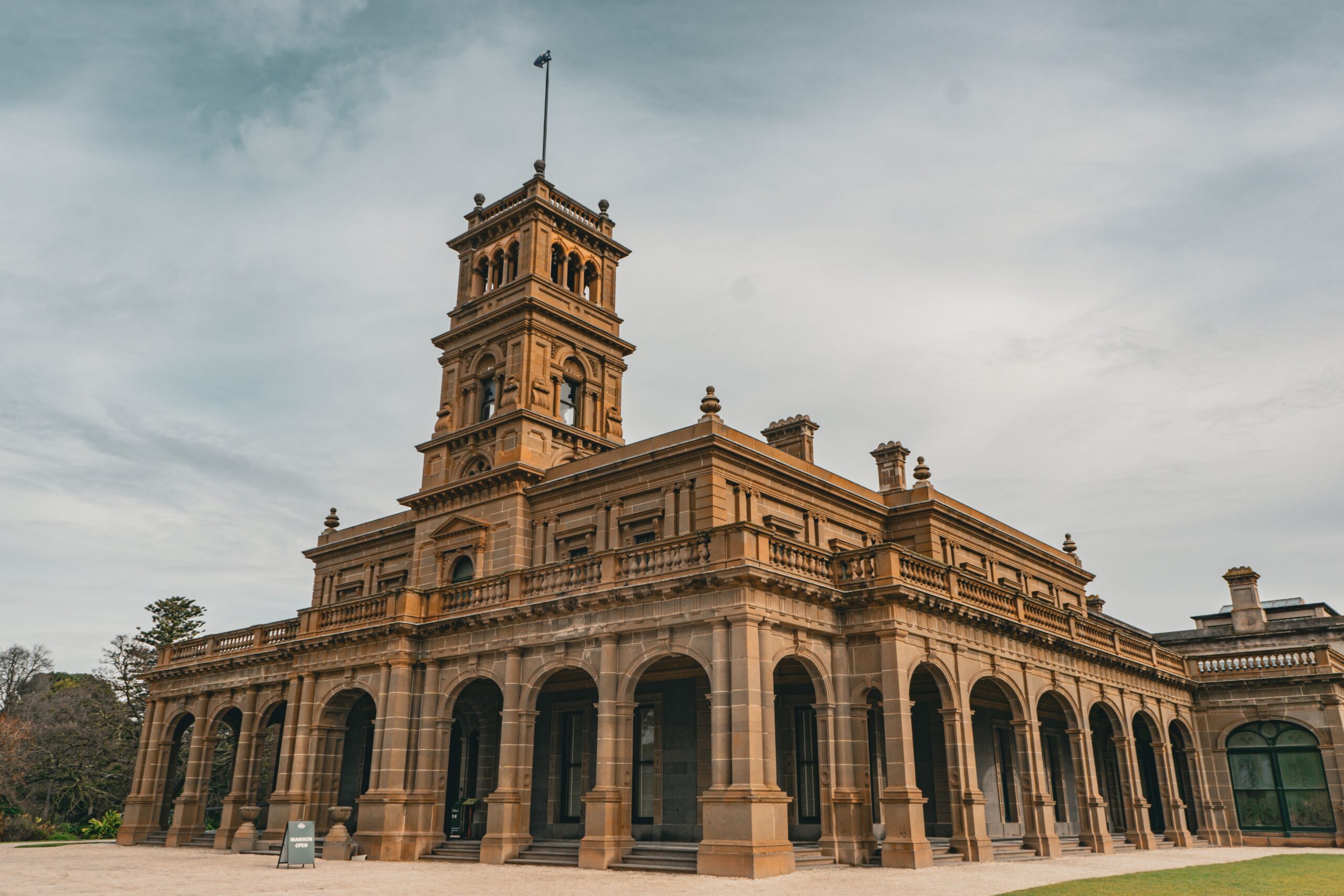
Werribee is 42.7 square kilometres. It contains an interwar heritage precinct, a coastal fringe, a hospital, Victoria University Werribee, a court complex, industrial land and more than twenty-five separate housing estates. It also holds some of Melbourne’s best-known attractions, including Werribee Open Range Zoo, Werribee Park Mansion and the National Equestrian Centre, plus the Pacific Werribee shopping centre.
Calling that a suburb and quoting one median for it is like quoting one temperature for Victoria.
I have written before about Hoppers Crossing next door. Hoppers is 17.6 square kilometres of mostly 1970s to 90s brick veneer, 71% owner-occupied, with a relatively more homogenous demographic. It is one thing, and the median means something.
Werribee is not one thing.
Let me show you the pockets.
Werribee vs Hoppers Crossing: the honest comparison
Since I get asked constantly, and since I have already written the Hoppers Crossing property investment piece.
| Metric (houses) | Werribee | Hoppers Crossing |
|---|---|---|
| Median house price | $650,000 | $688,250 |
| 12-month growth | +6.21% | +11.01% |
| Quarterly growth | +3.17% | +2.72% |
| Median rent | $460 | $480 |
| Gross yield | 3.71% | 3.71% |
| Days on market | 25 | 24 |
| Sales per annum | 1,135 | 718 |
| Owner-occupier rate | 63.8% | 71.2% |
| Population change 2016 to 2021 | +24.0% | -3.8% |
Sources: CoreLogic via YIP. Note the data vintages differ. Werribee to January 2026, Hoppers Crossing to March 2026. Compare with that in mind.
Read it straight. Hoppers Crossing is currently the dearer and faster-growing of the two. It has the higher owner-occupier rate, which I have argued for years is one of the most underrated predictors of a stable market.
What Werribee has is liquidity, 58% more house sales a year, and a wider spread of stock, which means a wider spread of opportunity for a buyer who actually does the work.
Hoppers Crossing is the safer default. Werribee is where the edge is, if you know where to look.
The pocket that actually matters: old Werribee
Here is what almost nobody tells you about Werribee, because it does not fit the outer growth corridor narrative.
Werribee has a genuine heritage core.
Wyndham Council’s heritage review identified 15 individual places and a residential precinct for heritage protection in Werribee and Little River, implemented through planning scheme amendment C270wynd. The Beamish and Gibbons Streets Residential Precinct was cited for its high percentage of interwar buildings, many of them with a high level of integrity.
There is also Carter Avenue, roughly 66 red and cream brick veneer houses built between 1941 and 1954 for the Carter poultry-farming family. An intact post-war street, in Werribee.
Walk that grid near Watton Street and the Werribee River, and you are standing in the only part of this suburb that a developer cannot replicate.
That is the whole thesis. Everything else in Werribee, every estate, every new townhouse, can be built again, and is being built again, twenty-five times over. Interwar houses on established streets, four hundred metres from a station that is thirty-five minutes from the city, cannot.
The double edge, and I want to be straight about it: a Heritage Overlay is exactly what stops you knocking it down and putting two townhouses on it. If your plan is dual-occ, the heritage precinct is a trap, not an opportunity.
If you are an owner-occupier looking for character, larger land and an established streetscape at a price that is still relatively affordable compared with Melbourne’s inner and middle suburbs, I think this is Werribee’s strongest pocket.
The pockets I like, in order
1. Established Werribee, south of Watton Street
Anything between Russell Street, Melanie Drive and the main shopping street in the heart of Werribee. Very much sought after by owner-occupiers for its proximity to the centre and to Werribee Secondary College. We recently purchased a four-bedroom, two-bathroom home on 683sqm on Maher Court for $700,000. This pocket is so tightly held that hardly anything comes up for sale, let alone anything under $750,000.
One reason established pockets command stronger owner-occupier demand is school zoning. Homes within sought-after catchments, particularly around Werribee Secondary College, tend to attract families willing to compete for limited stock. That demand can provide additional support for long-term capital growth.
2. East of Watton Street
Underrated. The streets bound by Duncans Road and Wattle Avenue. Very owner-occupier dominant. We purchased an off-market property on Sheringham Drive that secured tenants within the first week, because the family wanted to be in a good area within the Werribee Secondary College catchment zone.
3. Riverbend and the Wyndham Park river frontage
Council’s Werribee City Centre Structure Plan 2040 names Riverbend as a flagship project. Comben Drive, next to the train station, overlooking the river and Wyndham Park, with a new plaza connecting to Watton Street and a riverbank promenade. Council owns the catalyst sites.
The uplift thesis is genuine: river, park, four hundred metres to the station, and council-led activation.
But read the fine print in the Structure Plan. It says the majority of those catalyst sites may not go to market until 2030 to 2040.
That is a ten to fifteen year hold. Not a three-year flip. If you are buying the Riverbend story, buy it with a horizon that matches it.
4. The 1970s to 80s brick veneer belt
Outside the heritage overlay and outside the flood mapping. Regular lots, larger than the new estates, in a council that is actively loosening infill controls inside the activity centre. This is where the value-add and dual-occ buyers should be looking, and it is a narrow enough target that most people will not find it on realestate.com.au.
Where I would be careful
Every suburb has pockets that look cheap for a reason. I have written about this at length in Melbourne suburbs to avoid in 2026. Werribee has three worth knowing about.
Werribee South is not Werribee with a beach
The numbers are stark, and they are not what people expect.
- Median house $850,000, but down 3.41% over twelve months, and down 3.08% for the quarter.
- Gross yield 2.90%. The worst in the district.
- Twenty-four house sales in twelve months. Eighty days on market.
Twenty-four sales a year means there are no reliable comparables, and there is no market when you need to exit. That is a thin, illiquid, currently falling lifestyle market. It is a different asset class to Werribee proper.
And there is a live planning fight underneath it. Council received 44 submissions on the green wedge, 38 of them calling for rezoning. Wyndham Harbour owners want seaside towns similar to Williamstown and Altona. Market gardeners say farming there is no longer sustainable.
A panel hearing on the draft Werribee South Green Wedge Management Plan is listed for the week commencing 9 November 2026.
That is the single most consequential unresolved question in 3030, and it lands within months. If you are looking at Werribee South, watch that hearing before you bid, not after.
The one pocket I would approach cautiously: the Birdcage
Locals know the Birdcage as the pocket where many of the streets are named after birds. It has long been one of Werribee’s more affordable pockets, which naturally attracts investor attention.
Price alone, however, is not enough. Much of the Birdcage falls within ABS Statistical Areas ranked in the lowest IRSAD decile.
One misconception in property investing is that lower socio-economic areas automatically produce poor capital growth. That is simply not true. Some of Melbourne’s strongest-performing suburbs over the past two decades started out as relatively disadvantaged areas. Socio-economic status alone is not a reason to buy or avoid a suburb.
My concern with the Birdcage is different.
As a buyer’s advocate, I look beyond the purchase price and ask a more practical question: what is it like to own this property for the next 10 or 15 years?
Having purchased dozens of properties across Melbourne’s west, I have found that parts of the Birdcage can experience higher tenant turnover and softer rental demand than some other established pockets of Werribee. Higher vacancy does not just reduce rental income. It also means more leasing costs, more advertising spend, and more periods where the property is not producing income.
For investors, consistency matters. Most Victorian tenants are excellent and pay their rent on time. However, when a tenancy does go wrong, Victoria’s residential tenancy laws can make recovering rental arrears or regaining possession a lengthy and costly process for landlords. That makes tenant demand and location more important than many first-time investors realise.
For that reason, I would generally rather pay a little more for a property in an established pocket with stronger owner-occupier appeal and more consistent tenant demand than buy the cheapest house available.
Property investing is not just about buying below the median. It is about owning an asset that is consistently easy to lease, attracts stable long-term tenant demand, and is easier to hold through every stage of the property cycle. That is the heart of a sound property investment strategy in Melbourne.
Every investment should be assessed on its own merits, and there are individual properties in the Birdcage that may still represent good buying opportunities. My preference, however, is to direct clients towards pockets where I believe the long-term holding risks are lower.
The other pocket I would think twice about: the far-west estates
The opposite end of Werribee has a different risk altogether.
The newer estates on Werribee’s western fringe are often marketed as Werribee, but in reality they are competing with the same buyers and tenants looking at Wyndham Vale. In many cases you are only a few streets from the suburb boundary.
That matters because property values are not driven by postcodes. They are driven by competition.
If a prospective buyer can choose between your four-bedroom home on a 280sqm block in western Werribee or a similar new build on a larger block in Wyndham Vale for a comparable price, you have lost one of the biggest advantages that established Werribee traditionally offers.
The issue is not that these homes are new. It is that they are often built on very small lots in areas where there is still a significant pipeline of new housing.
From an investment perspective, I would rather own something that is becoming scarcer over time and where the improvements have already gone through much of their initial depreciation. In established areas, more of your purchase price is often allocated to the land, the part of the asset that generally becomes scarcer over time.
That is why my preference is generally for established parts of Werribee with larger land, mature streetscapes and stronger owner-occupier appeal. Those are characteristics that become harder to reproduce as a suburb matures.
The flood maps that have not landed yet
This one is a genuine, actionable warning, and it is the most valuable paragraph in this article.
The Werribee River has a 1,474 square kilometre catchment. There were significant floods in 1973, 1983, 1995, 2004, 2011, and again in October 2022.
Wyndham City is currently preparing new flood maps, off the back of a 2024 to 25 community mapping exercise. In council’s own words, those maps are to be introduced into the Wyndham Planning Scheme in the future.
Which means a riverside property in Werribee that is not currently in a flood overlay could be brought into one when the new mapping lands.
Your Section 32 will show you today’s overlays. It will not show you tomorrow’s.
Every riverside purchase in Werribee should be checked against the draft flood mapping, not just the current planning certificate. That is exactly the kind of thing a buyer’s advocate is paid to know, and it is the kind of thing that costs a buyer six figures at resale when it emerges three years later.
Note the tension, too. The river frontage is simultaneously the best amenity in the suburb and the flood exposure. Both are true. Buy it knowingly.
The infrastructure story, and the one everyone gets wrong
What is real and delivered
- Wyndham Law Courts. Opened November 2025. $271 million. Thirteen courtrooms. Victoria’s largest courts precinct outside the CBD.
- Werribee Mercy Hospital emergency department. Treatment spaces going from 33 to 67, completing 2026. An extra 25,000 patients a year.
- Level crossings. Both Werribee level crossings are already gone, Werribee Street in 2021 and Cherry Street in 2021.
- The Werribee line. Level-crossing free by 2029, with the remaining removals in the inner west. That means more trains, more often, on the line Werribee sits at the end of.
What everyone gets wrong: East Werribee
You will read, including on Wyndham Council’s own website, that the Australian Education City has been selected as preferred bidder for 400 hectares at East Werribee. A $31 billion innovation district. Faculties for 50,000 students. Housing for 80,000 people.
That proposal is dead. The Victorian Government concluded the expression of interest process and it is not proceeding. Council’s page is years out of date and is still citing project completion dates of 2015 and 2017.
What is actually true: there is 600 to 775 hectares of surplus government land, a 2013 precinct plan targeting around 58,000 jobs, and an Opportunity Statement released in 2024. And the State’s own FAQ says plainly that it is not yet known how that land is going to be used.
East Werribee is a twenty-year option. It is not a catalyst you can underwrite today.
If someone is selling you Werribee on the East Werribee story, they either have not checked, or they are hoping you will not.
And the crime question, done properly
Because it is the first thing people say about Werribee, and the number they are quoting is wrong.
The Crime Statistics Agency data for the year ending March 2026:
- Wyndham LGA: 24,231 offences, down 0.1%. The first reduction in ten years.
- Werribee suburb: 5,349 offences, down from 5,884. A fall of about 9%.
- By category: burglary down 21.6%, theft down 15.4%, property damage down 18.7%, robbery down 17.6%.
Now the part that matters.
Werribee’s crime rate gets quoted at 10,692 offences per 100,000 people.
That figure is calculated using the 2021 Census population of 50,027. Werribee’s population has grown enormously since. Current estimates are around 59,600.
Recompute it on the actual population and the rate is roughly 8,976 per 100,000, about 16% lower than the number being published.
Every Werribee crime rate headline you have read is inflated by five years of population growth that the denominator has not caught up with.
Two honest caveats, because I am not going to spin this.
Werribee is still the highest-volume suburb in Wyndham, 5,349 offences against Hoppers Crossing’s 3,971. It is a bigger suburb, so per capita the gap narrows. It does not close. Which is exactly why understanding the different pockets matters.
And Watton Street is a genuine hotspot. Police have run targeted operations there. But look at what the offences actually are: thefts and shoplifting in a daytime retail strip. That is retail-strip crime, not residential burglary. Living two streets from Watton Street is not the same risk profile as trading on it, and almost nobody makes that distinction.
Who Werribee is actually for
It suits
- The owner-occupier who wants character on a real block, walking distance to a real town centre, at an outer-Melbourne price. The established pocket in the heart of Werribee, south of Watton Street, where stock is scarce and the city is 35 minutes away by train.
- The long-hold capital growth investor. 1,135 sales a year, 25 days on market, 0.36% stock on market, 2.25 months of inventory. Read that alongside the broader Melbourne property market outlook for 2026.
- The value-add buyer who does the work. 1970s to 80s brick veneer on regular lots, outside the heritage overlay, outside the flood mapping, in a council actively loosening infill controls. Narrow target. Real edge.
- The buyer priced out of Hoppers Crossing. $38,000 cheaper on the median, identical yield, better liquidity.
It does not suit
- Yield hunters. 3.71% gross.
- Anyone underwriting East Werribee. It is dead. Do not buy the story.
- Anyone who needs a short hold. Werribee is a long-term hold.
- Daily CBD drivers. Werribee is a train suburb. If you will be on the West Gate every morning, buy elsewhere.
- Lifestyle punters in Werribee South who have not understood that 24 sales a year is not a market.
If you are weighing Werribee against the other western corridor suburbs, it is cheaper and more character-rich than Point Cook, and more established and tightly held than Tarneit or Wyndham Vale. Unlike any of them, it has a genuine heritage core. The trade-off is that the new-estate pockets of Werribee compete directly with those suburbs, which is exactly why the established streets are the ones that hold their edge. Buyers looking north-west rather than west often end up comparing it with Hillside, 3037, which plays a similar role in that corridor. And if you are still deciding how far out to go, it is worth working through whether you should buy in Melbourne or regional Victoria before you commit to a corridor at all.
The bottom line on Werribee
Werribee’s median tells you almost nothing, because Werribee is not a suburb. It is about six suburbs wearing the same postcode.
Buy in an estate, competing with twenty-four other estates and four hundred more across the west, and you will get a house that can be rebuilt next door for the same price the day you try to sell it.
Buy an interwar weatherboard on Gibbons Street, four hundred metres from a station and a river and a town centre that council is spending money on for the next fifteen years, and you own something that cannot be made again.
Same suburb. Same median. Completely different outcome.
Melbourne is not one market. Werribee is not even one market.
Buy the street. Not the postcode.
Frequently asked questions about Werribee, 3030
Werribee is about 30km south-west of the Melbourne CBD, in the City of Wyndham. It is the terminus of the Werribee train line, roughly 35 minutes from the city by train.
The median house sale price is around $650,000 (CoreLogic, 12 months to January 2026), up 6.21% over the year. Units sit around $460,000. Note that hedonic models like HtAG put the typical Werribee house higher, at around $783,000. The gap exists because the houses that trade in Werribee skew older and smaller than the houses that exist there.
It depends entirely on which part, and on what you want. For capital growth in the established pockets near the town centre and the river, yes. For rental yield, not right now, because rents are flat.
For families and owner-occupiers, the established pockets south and east of Watton Street are the strongest. Walkable to the town centre, close to schools including Werribee Secondary College, and served by the train line, Pacific Werribee shopping centre, Werribee Mercy Hospital and major attractions like Werribee Open Range Zoo and Werribee Park. As with buying, the experience varies enormously by pocket.
On current data, Hoppers Crossing has grown faster (+11.01% against +6.21%) and has a higher owner-occupier rate (71% against 64%). Werribee is cheaper by about $38,000, more liquid (1,135 sales a year against 718), and has a far wider spread of stock, including a genuine heritage core that Hoppers does not have.
Mostly, no. Melbourne Water describes the odour as relatively minor and says it occurs under specific wind and atmospheric conditions. But the lagoon covers are replaced every 5 to 7 years, and during that 3 to 6 month maintenance window the odour is much higher than normal and can be detected at or beyond the plant boundary. Exposure depends on how close you are to the plant, which sits south-west toward Werribee South.
Parts of it are, near the Werribee River. And critically, Wyndham City is preparing new flood maps to be introduced into the planning scheme. A property that is not in a flood overlay today may be in one tomorrow. Check the draft mapping, not just the current planning certificate.
Less than you have been told. The Australian Education City proposal, a $31 billion innovation district, is dead. The state concluded the EOI process and it is not proceeding. Council own website still describes it as live, which is wrong. There is surplus government land and a precinct plan, but the state says it does not yet know how the land will be used. Do not buy on this story.
Werribee is the highest-volume suburb in Wyndham, but crime fell about 9% in the year to March 2026, with burglary down 21.6% and theft down 15.4%. The widely quoted per-capita rate is inflated because it is calculated on the 2021 population, which is roughly 16% below the actual current population. The known hotspot, Watton Street, is retail theft in a daytime shopping strip, not residential burglary.
Work with a Melbourne buyers advocate
If you are looking at Melbourne’s west and want someone who knows which side of the flood map you are standing on, that is exactly what a buyers advocate is for. If you have not engaged one before, start with how to choose the right buyers agent in Melbourne.
At First Move Property we act only for buyers, never for sellers, and we spend our weeks walking these streets and reading the planning documents most buyers never open.
Book a call with First Move Property and let us pressure-test your brief, your budget and your buying plan. You can also watch me walk these suburbs and break down the data on my YouTube channel.
About the Author: Haley Lim
Haley Lim is the Founder and Managing Director of First Move Property, a passionate property investor, and a trusted Melbourne buyers advocate with deep knowledge of the local market.
Before founding First Move Property, Haley was a professional negotiator who held senior corporate leadership roles and led high-stakes commercial negotiations worth billions of dollars across Europe, Australia and New Zealand in the fuel and energy sector.
That background gives her clients a clear edge in Melbourne’s property market, combining strategic thinking, calm execution and disciplined negotiation. Today, Haley brings that same approach to every client she represents, helping home buyers and investors navigate Melbourne with clarity, reduce avoidable risk, and secure properties that align with their long-term goals.
Connect with Haley: LinkedIn | Email: haley@firstmoveproperty.com.au | Phone: 0477 555 783
“Haley’s expertise in the Melbourne market was obvious from the start. Her guidance, communication and after-sale support made the whole investment journey smoother and more manageable.” Tomi S.
“Haley and her team filtered out properties that did not fit my plan or budget, handled inspections and negotiations, and connected me with the right broker and conveyancer. Highly recommended.” Catherine Y.
About this article: written by Haley Lim, founder of First Move Property and a licensed Melbourne buyer’s agent with direct experience buying in Melbourne’s west. Market data is sourced from CoreLogic/Cotality (12 months to January 2026), HtAG Analytics and the ABS Census 2021. Crime data from the Crime Statistics Agency (year ending March 2026). Infrastructure and planning information from Wyndham City Council, Melbourne Water, Court Services Victoria and Victoria’s Big Build. Last reviewed July 2026.
Disclaimer: the information in this article is general in nature and does not constitute professional financial or investment advice. Property investment involves risks. Suburb-level commentary reflects the author’s professional opinion based on publicly available market data and is not a recommendation for or against any specific property purchase. We recommend seeking independent financial, legal and taxation advice before making any real estate decision.